
CAREERS ENCYCLOPEDIA

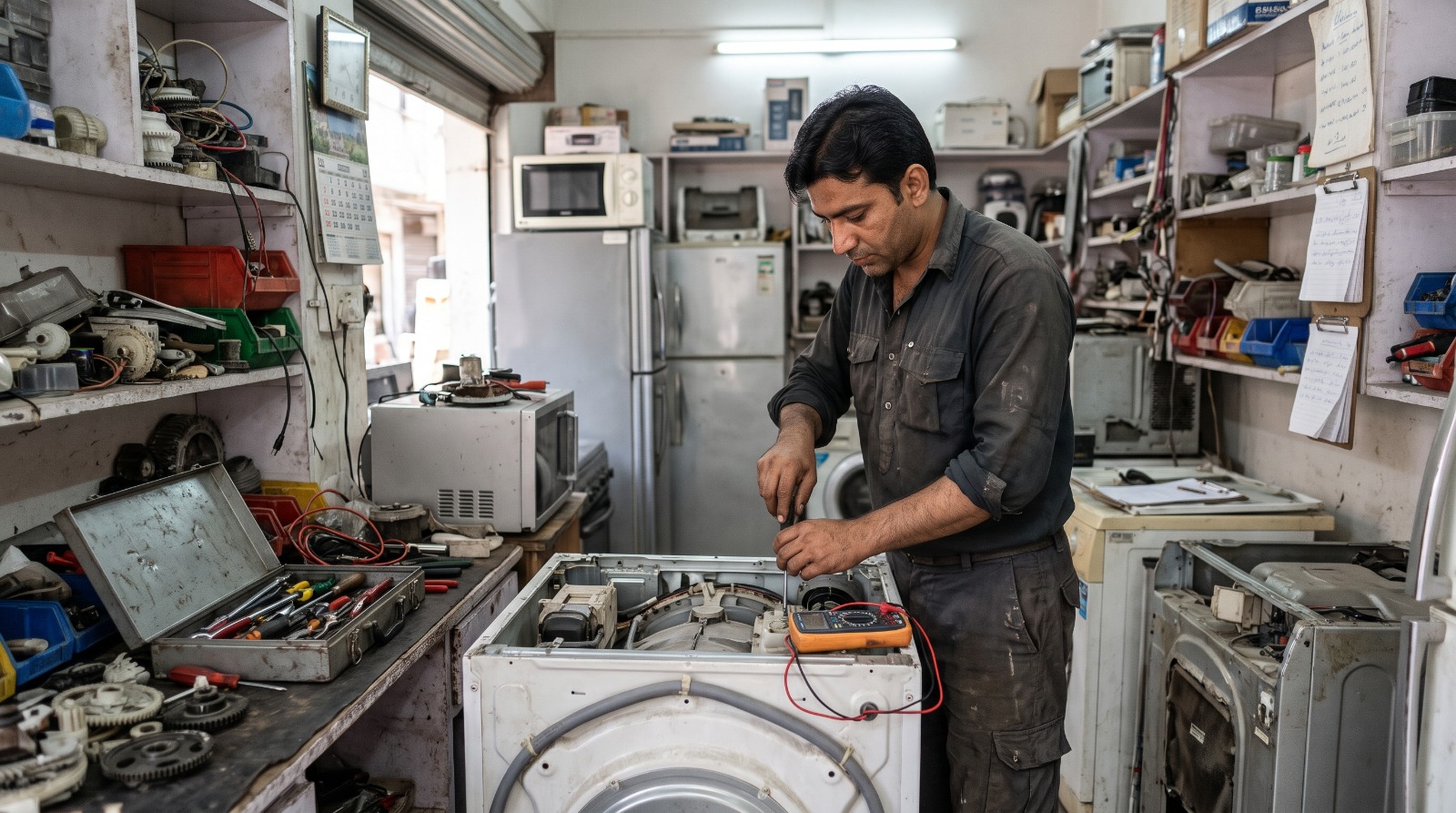
Appliance Repairer
An Appliance Repairer inspects, diagnoses, repairs, and maintains household and commercial appliances. These may include refrigerators, washing machines, microwave ovens, air conditioners, electric fans, and other electrical equipment. They identify faults, replace damaged parts, and ensure appliances operate safely and efficiently.
- Inspect appliances to identify faults and damage.
- Diagnose electrical, mechanical, and electronic problems.
- Repair or replace defective components and wiring.
- Service refrigerators, washing machines, fans, and other appliances.
- Use testing instruments to check appliance performance.
- Install appliances and explain their proper use to customers.
- Perform routine maintenance to prevent equipment failure.
- Estimate repair costs and prepare service reports.
- Maintain tools, spare parts, and workshop equipment.
- Follow electrical safety procedures and manage customer service requests.
Electrical and Electronic Systems
- Understand basic electrical circuits, wiring, and components.
- Know how switches, motors, sensors, and control boards operate.
- Understand electrical testing and fault detection methods.
Mechanical Systems
- Understand motors, belts, bearings, pumps, and moving parts.
- Know the operating principles of common household appliances.
- Understand lubrication, cleaning, and preventive maintenance.
Repair Safety and Standards
- Understand electrical isolation and safe testing procedures.
- Know how to handle tools and replacement components safely.
- Understand refrigerant handling requirements for refrigeration appliances.
Fault Diagnosis and Repair
- Identify electrical and mechanical faults.
- Repair or replace defective parts.
- Test appliances after completing repairs.
Tool and Equipment Handling
- Use multimeters, screwdrivers, pliers, and other repair tools.
- Operate diagnostic instruments safely.
- Maintain workshop tools and testing equipment.
Customer Service and Work Management
- Explain faults and repair options to customers.
- Estimate costs and manage service records.
- Organize repair jobs and spare parts efficiently.
Technical Ability
- Understand how appliance components work together.
- Follow wiring diagrams and repair instructions.
- Assemble and disassemble equipment carefully.
Problem-Solving Ability
- Identify the cause of equipment failure.
- Compare possible repair solutions.
- Test repaired appliances to confirm safe operation.
Manual Dexterity
- Handle small components and electrical connections.
- Use hand tools accurately.
- Work carefully in confined or difficult-to-access spaces.
Appliance Repairers are generally practical, patient, detail-oriented, and interested in technical work. They do well at jobs that need:
- Problem-Solving: Diagnose and correct appliance faults.
- Patience: Work through complex repairs carefully.
- Accuracy: Fit components and connections correctly.
- Responsibility: Follow safety procedures.
- Adaptability: Repair different appliance models and brands.
- Customer Focus: Provide reliable and respectful service.
Testing and Diagnostic Equipment
- Use digital multimeters and clamp meters.
- Test motors, switches, sensors, and electrical circuits.
- Use manufacturer diagnostic tools where available.
Repair Tools
- Use screwdrivers, pliers, spanners, and soldering equipment.
- Use specialized tools for refrigeration and appliance servicing.
- Maintain tools and equipment in safe working condition.
Digital Service Tools
- Access digital repair manuals and wiring diagrams.
- Maintain customer records and service reports.
- Use mobile applications to manage appointments and spare parts.
- Matric with science subjects or a relevant technical background is beneficial.
- A vocational certificate or diploma in electrical, electronics, or appliance repair is useful.
- Knowledge of electrical safety and basic circuits.
- Practical training in diagnosing and repairing appliances.
- Ability to use testing instruments and hand tools.
- Understanding of motors, wiring, and electronic components.
- Good communication and customer service skills.
- Apprenticeship or workshop experience is highly beneficial.
- Specialized training is needed for refrigeration systems and refrigerant handling.
Appliance Repairers can find work with appliance service centers, electronics retailers, maintenance companies, and independent repair businesses. Demand is supported by the ongoing use of household and commercial appliances and the need to extend equipment life. Experienced technicians may progress to Senior Appliance Technician, Service Supervisor, Workshop Manager, or establish their own repair business.
- Home appliance repair workshops.
- Authorized service centers for appliance brands.
- Electronics and home appliance retailers.
- Refrigerator and air conditioner service companies.
- Hotels, hospitals, and commercial facilities.
- Property maintenance and facility management companies.
- Appliance installation and maintenance businesses.
- Industrial and commercial equipment service providers.
- Self-employed repair and home service businesses.
- Technical training centers.
- Matric or Intermediate education.
- Certificate in electrical or electronics technology.
- Diploma of Associate Engineering in Electrical or Electronics Technology.
- Vocational training in home appliance repair.
- Specialized courses in refrigeration and air conditioning.
- Practical training in motors, wiring, control boards, and diagnostic tools.
- Electrical safety and workplace safety training.
- Apprenticeship under an experienced technician.
- National Vocational and Technical Training Commission (NAVTTC): Check current appliance repair, electrical, and electronics training programs.
- Punjab Technical Education and Vocational Training Authority (TEVTA): Vocational and technical courses where offered.
- Khyber Pakhtunkhwa Technical Education and Vocational Training Authority (KP-TEVTA): Explore relevant electrical and appliance servicing courses.
- Government Colleges of Technology: Electrical and electronics diplomas where available.
- Government vocational training centers: Practical technical courses in appliance servicing.
- Private technical institutes: Short courses in home appliances, refrigeration, and electronics repair.
- Manufacturer-authorized service centers: Product-specific training and supervised practical experience where available.
- Basic appliance repair course: PKR 10,000 to 40,000.
- Advanced electrical and electronics repair training: PKR 20,000 to 80,000.
- Diploma in electrical or electronics technology: PKR 20,000 to 150,000 in total at selected public institutes.
- Refrigeration and air conditioning course: PKR 15,000 to 60,000.
- Basic repair tool kit: PKR 10,000 to 30,000.
- Digital multimeter and testing equipment: PKR 3,000 to 15,000.
- Safety equipment and work clothing: PKR 3,000 to 10,000.
- Spare parts and practice materials: PKR 5,000 to 20,000.
- Eligible trainees may receive 25% to 100% financial assistance through government vocational training schemes, provincial programs, or institute-based support.
- Some employers and authorized service centers provide paid apprenticeships or job-related training.