
CAREERS ENCYCLOPEDIA

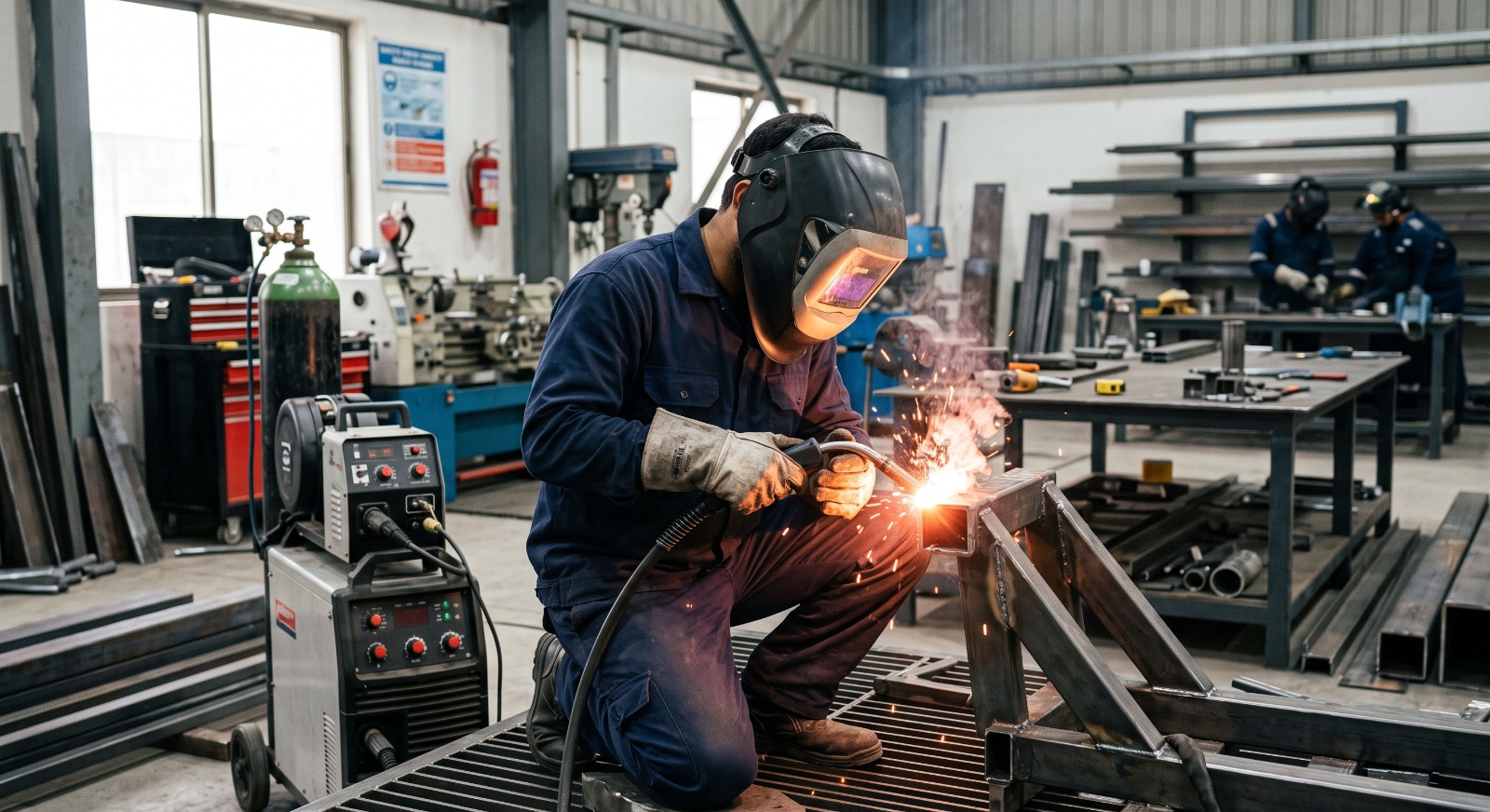
Welder
A Welder joins and repairs metal parts using heat, pressure, or a combination of both. Welders work with different metals and welding methods to manufacture, repair, and maintain structures, machinery, vehicles, pipelines, and other metal products.
- Read and understand basic technical drawings
- Prepare metal surfaces for welding
- Set up welding equipment
- Join metal parts using suitable welding methods
- Cut and shape metal materials
- Inspect welds for defects
- Repair damaged metal structures
- Maintain welding tools and equipment
- Follow workplace safety procedures
- Keep the work area clean and organized
- Welding methods
- Metal properties
- Welding equipment
- Basic technical drawings
- Metal fabrication
- Welding safety
- Workplace safety procedures
- Basic mathematics and measurements
- Arc welding
- Gas welding
- MIG welding
- TIG welding
- Metal cutting
- Metal grinding
- Equipment handling
- Measurement
- Basic blueprint reading
- Work accurately with metal materials
- Maintain steady hand movements
- Identify welding defects
- Follow technical instructions
- Operate welding equipment safely
- Work in different positions and environments
- Perform physically demanding tasks
- Careful
- Patient
- Practical
- Responsible
- Detail oriented
- Safety conscious
- Hardworking
- Reliable
- MIG welding machines
- TIG welding machines
- Arc welding machines
- Gas welding equipment
- Plasma cutters
- Angle grinders
- Welding positioners
- Welding inspection equipment
No university degree is required. Candidates can enter the field through vocational training, technical education, apprenticeships, or practical workplace training. Basic education and physical fitness may be required depending on the employer.
Welders can find employment in construction, manufacturing, engineering, automotive, shipbuilding, oil and gas, and metal fabrication industries. Skilled welders may also find opportunities in international construction and industrial projects.
- Construction companies
- Manufacturing industries
- Engineering workshops
- Automobile companies
- Shipbuilding companies
- Oil and gas companies
- Metal fabrication workshops
- Steel mills
- Industrial plants
- Welding and repair workshops
- Matriculation
- Certificate in Welding
- Diploma in Welding Technology
- DAE Mechanical Technology
- Vocational welding courses
- Apprenticeship training
- Government Technical Training Institutes
- Technical Education and Vocational Training Authority institutes
- National Vocational and Technical Training Commission affiliated institutes
- Government vocational training centers
- Private technical training institutes
- Industrial training centers
Training costs vary depending on the institute and course duration. Students can explore government supported vocational programs, merit scholarships, need based financial assistance, and skills development programs. Practical training may require additional costs for tools and safety equipment.