
CAREERS ENCYCLOPEDIA

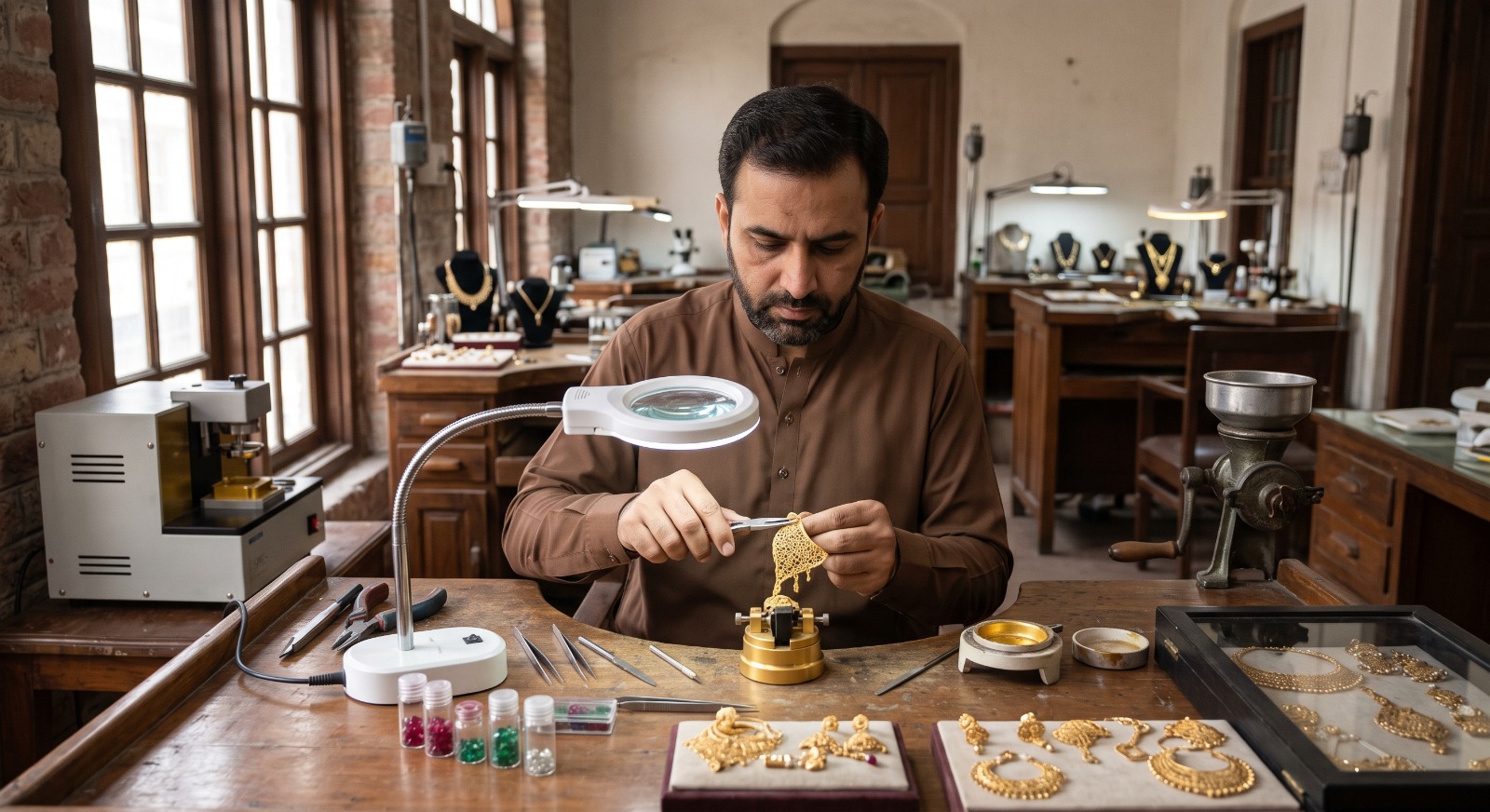
Jeweler
A Jeweler designs, creates, repairs, and finishes jewelry made from precious metals, gemstones, and other materials. Jewelers may work on rings, necklaces, bracelets, earrings, ornaments, and custom jewelry pieces. They may also assess gemstones, polish finished pieces, and modify existing jewelry.
- Design jewelry according to customer requirements
- Measure and cut metals
- Shape and join metal components
- Set gemstones securely
- Polish and finish jewelry
- Repair damaged jewelry
- Resize rings and other jewelry items
- Inspect finished pieces for quality
- Use tools and equipment safely
- Discuss designs and requirements with customers
- Jewelry design
- Precious metals
- Gemstones
- Jewelry making techniques
- Metalworking
- Gemstone setting
- Polishing and finishing
- Jewelry repair
- Basic business practices
- Workplace safety
- Jewelry making
- Metal shaping
- Gemstone setting
- Soldering
- Polishing
- Engraving
- Design and sketching
- Repair and restoration
- Precision measurement
- Customer service
- Ability to work with very small objects
- Ability to make precise measurements
- Ability to use hand tools accurately
- Ability to recognize differences in materials and gemstones
- Ability to concentrate for long periods
- Ability to visualize designs
- Ability to perform detailed work
- Ability to maintain quality and accuracy
- Creative
- Patient
- Careful
- Detail oriented
- Precise
- Artistic
- Responsible
- Trustworthy
- Focused
- Customer oriented
- Jewelry design software
- Computer aided design software
- Digital microscopes
- Jewelry polishing machines
- Laser welding equipment
- Gemstone testing equipment
- 3D printers
- Precision measuring instruments
- Jewelry casting equipment
A formal degree is not always required to become a Jeweler. Secondary education combined with practical training or apprenticeship can provide a starting point. Specialized courses in jewelry making, gemology, metalworking, or jewelry design can provide additional preparation.
Jewelers can work in jewelry manufacturing, retail stores, workshops, design studios, gemstone businesses, and independent businesses. Opportunities may increase with strong craftsmanship, jewelry design skills, gemstone knowledge, experience, and the ability to create custom pieces.
- Jewelry shops
- Jewelry manufacturing companies
- Jewelry design studios
- Gemstone businesses
- Goldsmith workshops
- Jewelry repair workshops
- Fashion brands
- Export companies
- Retail businesses
- Independent jewelry workshops
Students can learn jewelry making through vocational training, apprenticeships, diploma programs, or specialized courses. Training in jewelry design, gemology, metalworking, and fine arts can also be useful.
- Pakistan Institute of Fashion and Design
- National College of Arts
- Indus Valley School of Art and Architecture
- TEVTA institutes
- NAVTTC affiliated training institutes
- Government vocational training institutes
- Private jewelry and gemology training institutes
Expenses vary depending on the training program, institution, and materials required for practical work. Jewelry training may involve additional costs for tools, metals, gemstones, and other materials. Students can check educational and vocational institutions for merit based scholarships, need based financial assistance, fee concessions, and government supported training programs.