
CAREERS ENCYCLOPEDIA

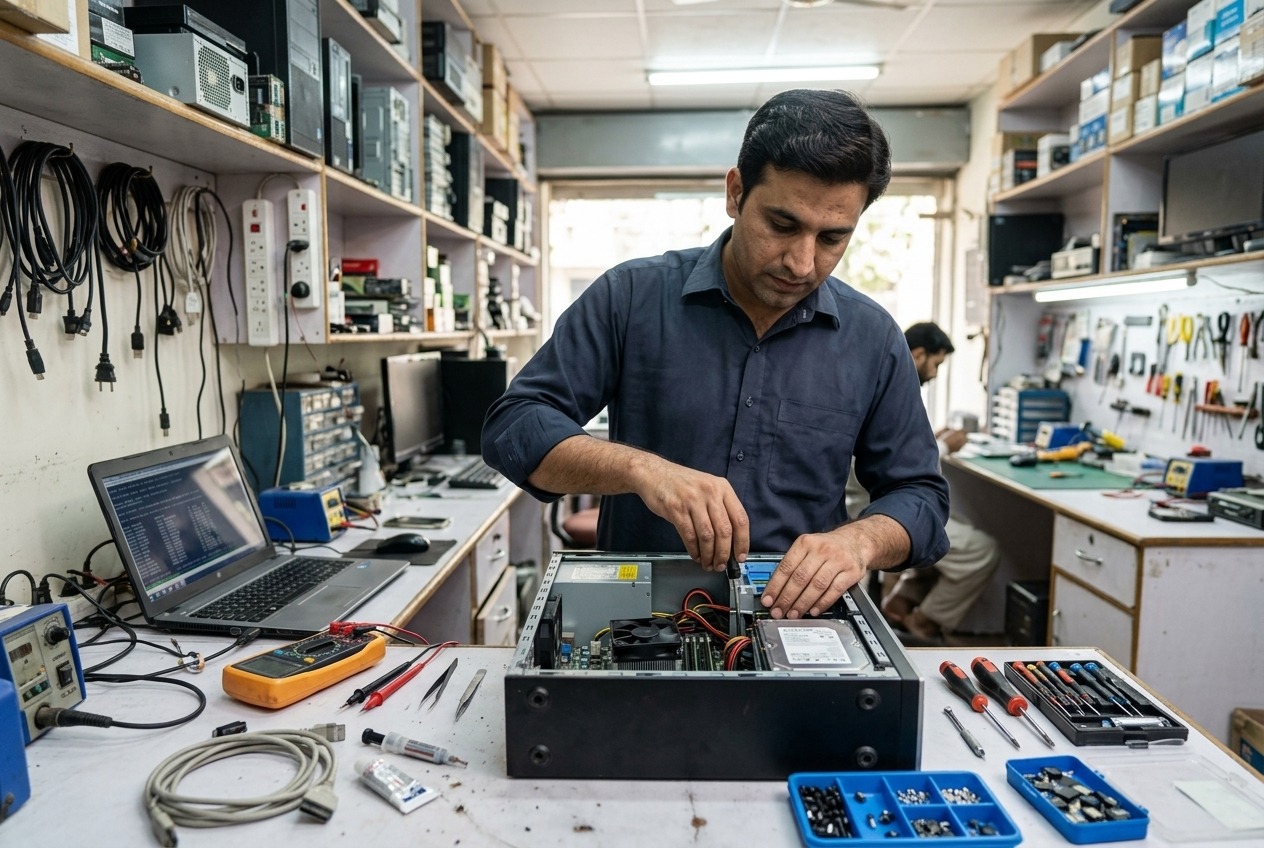
Hardware Technician
A Hardware Technician installs, maintains, tests, and repairs computer hardware and related electronic equipment. This professional identifies technical faults, replaces damaged components, upgrades computer systems, and ensures that devices operate properly. In Pakistan, Hardware Technicians may work in IT companies, computer repair shops, educational institutions, offices, and technical support departments.
- Install and configure computer hardware components
- Diagnose hardware faults and system failures
- Repair or replace damaged computer parts
- Install RAM, hard drives, solid-state drives, and power supplies
- Assemble desktop computers and connect peripherals
- Maintain printers, monitors, keyboards, and other devices
- Test repaired equipment to ensure proper operation
- Perform routine hardware maintenance and cleaning
- Maintain records of repairs, parts, and service requests
- Provide basic technical support to users
Computer Hardware Components
- Understand processors, motherboards, RAM, and storage devices
- Know the functions of power supplies and cooling systems
- Understand hardware compatibility and upgrade requirements
Hardware Troubleshooting
- Understand common computer hardware problems
- Know methods for testing and diagnosing faulty components
- Understand system startup errors and device failures
Electrical and Safety Principles
- Understand basic electrical safety procedures
- Know how to handle electronic components safely
- Understand electrostatic discharge protection methods
Hardware Installation and Repair
- Assemble and disassemble desktop computers
- Install and replace computer components
- Connect and configure peripheral devices
Troubleshooting and Testing
- Identify hardware faults using diagnostic methods
- Test components and verify system performance
- Resolve common computer hardware problems
Maintenance and Documentation
- Clean and maintain computer equipment
- Record repairs and replacement parts
- Explain technical problems and repair options to users
Technical Ability
- Work with computer components and electronic devices
- Use diagnostic tools to identify faults
- Follow repair procedures accurately
Problem-Solving Ability
- Identify the possible causes of hardware failures
- Compare repair and replacement options
- Find practical solutions to technical problems
Manual Dexterity
- Handle small components and connectors carefully
- Use repair tools with precision
- Assemble and disassemble equipment safely
People interested in this work like activities that include repairing devices, working with technology, solving technical problems, and assembling computer systems.
They do well at jobs that need:
Patient
Practical
Analytical
Responsible
Detail-oriented
Problem-solving
Computer Hardware and Components
- Desktop computers and laptops
- Processors, RAM, motherboards, and storage devices
- Printers, monitors, and computer peripherals
Diagnostic and Repair Tools
- Digital multimeters
- Screwdriver and precision repair tool kits
- Hardware diagnostic software
Operating Systems and Utilities
- Windows installation and recovery tools
- Device drivers and firmware utilities
- System monitoring and hardware testing software
- Matric or Intermediate education may be sufficient for entry-level training
- A technical diploma or certificate in Computer Hardware, IT Support, or Electronics can be beneficial
- Knowledge of computer components and basic electronics
- Practical experience in assembling, testing, and repairing computers
- Familiarity with operating system installation and troubleshooting
- Ability to follow electrical safety and equipment handling procedures
- Good communication and problem-solving skills
Hardware Technicians can find opportunities in computer repair services, IT support departments, educational institutions, businesses, and electronics service centers in Pakistan. Demand is supported by the need to maintain and repair computers and related equipment. Technicians with experience in laptop repair, networking hardware, and IT support may have broader employment opportunities. With additional training, they may progress to IT Support Specialist, Network Technician, or Hardware Support Engineer roles.
- Computer repair and service centers
- IT companies and technology firms
- Schools, colleges, and universities
- Government departments
- Banks and corporate offices
- Hospitals and healthcare organizations
- Computer hardware retailers
- Electronics repair workshops
- Internet service providers
- Freelance computer repair services
- Matric with Science or Computer Science
- Intermediate in Computer Science or a related field
- Diploma in Computer Hardware or Information Technology
- Certificate course in computer hardware installation and repair
- Diploma in Electronics Technology
- Short courses in laptop repair and hardware troubleshooting
- Additional training in networking and technical support
- National Vocational and Technical Training Commission (NAVTTC), Pakistan
- Technical Education and Vocational Training Authority (TEVTA), Punjab
- Government College of Technology, Rawalpindi
- Government College of Technology, Lahore
- National Skills University, Islamabad
- Pakistan Institute of Engineering and Applied Sciences (PIEAS), Islamabad, for related technical learning pathways
- Recognized private computer training institutes offering hardware repair courses
- Basic computer hardware course: PKR 10,000 to 40,000
- Advanced hardware repair course: PKR 20,000 to 80,000
- Diploma in Information Technology or Electronics: PKR 30,000 to 150,000 per year
- Private technical institute training: PKR 40,000 to 200,000 per year
- Computer repair tool kit: PKR 5,000 to 25,000
- Diagnostic tools and testing equipment: PKR 5,000 to 30,000
- Books and study materials: PKR 3,000 to 15,000
- Merit scholarships: 25 percent to 100 percent, depending on the institution and eligibility
- Need-based financial aid and subsidized vocational training may also be available