
CAREERS ENCYCLOPEDIA

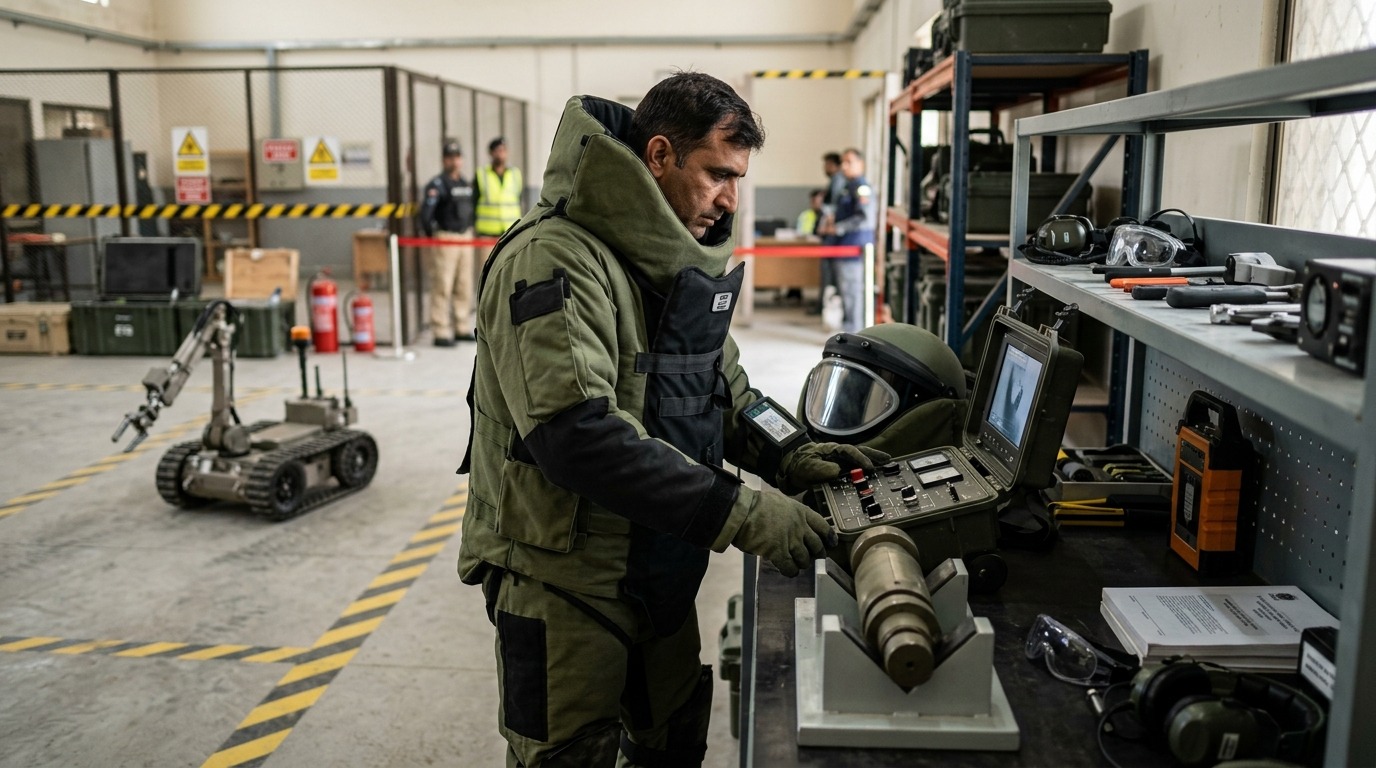
Explosive Ordnance Specialist
An Explosive Ordnance Specialist is a trained professional who identifies, assesses and safely manages unexploded ordnance and explosive hazards. In Pakistan, these specialists may work with military, police, emergency response and specialized bomb disposal organizations.
- Identify suspected explosive hazards
- Assess risks at incident locations
- Establish safety and exclusion areas
- Support bomb disposal and emergency teams
- Inspect recovered ordnance under approved procedures
- Maintain incident records and technical reports
- Follow strict safety and handling procedures
- Coordinate with security and emergency personnel
- Participate in specialist safety and response training
Explosive Ordnance
- Understand different types of unexploded ordnance
- Recognize general characteristics of explosive hazards
- Understand risks associated with damaged or abandoned ordnance
Safety Procedures
- Know specialist safety protocols
- Understand isolation and evacuation procedures
- Follow approved hazardous-material response practices
Incident Management
- Understand emergency response procedures
- Know reporting and evidence documentation requirements
- Understand coordination between security and emergency teams
Hazard Assessment
- Assess suspected explosive hazards from a safe position
- Identify appropriate safety measures
- Follow established risk assessment procedures
Technical Inspection
- Use authorized detection and inspection equipment
- Record technical observations accurately
- Maintain specialist equipment properly
Emergency Coordination
- Communicate clearly with response teams
- Follow incident command procedures
- Support evacuation and site control activities
Attention to Detail
- Notice unusual or hazardous conditions
- Follow detailed procedures accurately
Technical Ability
- Operate specialist detection and safety equipment
- Understand technical information and instructions
Decision Making
- Respond appropriately to changing safety conditions
- Follow established emergency protocols
Physical and Mental Control
- Remain calm in high-risk environments
- Work carefully under pressure
People interested in this work like activities that include technical work, public safety, emergency response and field operations.
They do well at jobs that need:
- Calm
- Disciplined
- Responsible
- Alert
- Courageous
- Team-oriented
Detection Equipment
- Authorized ordnance detection systems
- Remote inspection equipment
- Protective monitoring equipment
Robotics and Remote Systems
- Remote-controlled inspection platforms
- Specialist cameras
- Remote observation systems
Communication Systems
- Secure communication equipment
- Incident coordination systems
- Field communication devices
- Usually requires recruitment into a military, police, bomb disposal or specialized emergency response organization
- Minimum education requirements vary by organization
- Specialized explosive ordnance training is required
- Medical and physical fitness standards may apply
- Psychological and security assessments may be required
- Extensive supervised practical training is normally required
Explosive Ordnance Specialists are specialized public safety professionals. Career opportunities are mainly found in defence, law enforcement, bomb disposal, emergency response and organizations responsible for managing explosive hazards.
- Military and defence organizations
- Police bomb disposal units
- Civil defence organizations
- Emergency response departments
- Airport security organizations
- Border security agencies
- Disaster response organizations
- Specialized hazardous materials teams
- Government security institutions
- Secondary or higher secondary education may be required for entry-level recruitment
- Military or police specialist training
- Explosive ordnance safety training
- Emergency response training
- First aid and field safety training
- Advanced specialist courses provided by authorized organizations
- Pakistan Army training institutions
- Pakistan Navy training institutions
- Pakistan Air Force training institutions
- National Police Academy
- Police training colleges
- Civil defence and emergency response training centers
- Authorized government security training institutions
- Basic safety and emergency courses: PKR 10,000 to 50,000
- First aid training: PKR 5,000 to 25,000
- Emergency response training: PKR 10,000 to 60,000
- Specialist technical courses: PKR 20,000 to 150,000
- Safety equipment and protective training: PKR 10,000 to 80,000
- Government or service-based specialist training may be funded by the employing organization
- Merit and need-based scholarships may be available for relevant academic programs