
CAREERS ENCYCLOPEDIA

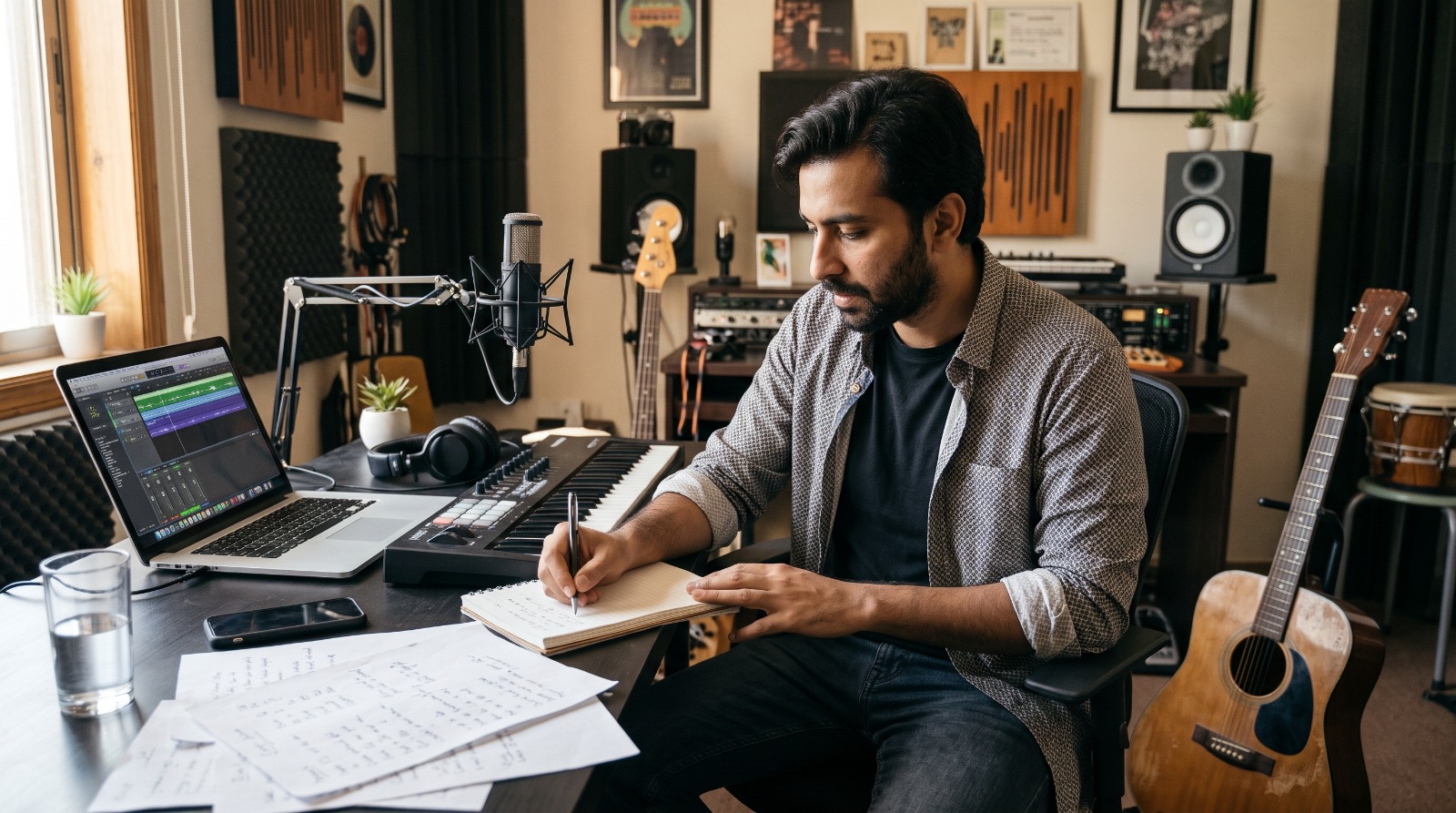
Songwriter
A Songwriter creates lyrics, melodies, and musical ideas for songs used in films, television, music albums, advertisements, and digital media. Songwriters express emotions, stories, and ideas through words and music while collaborating with singers, composers, producers, and music directors.
- Develop ideas and themes for new songs.
- Write lyrics based on emotions, stories, experiences, or creative briefs.
- Create melodies and song structures such as verses, choruses, and bridges.
- Collaborate with composers, singers, and music producers.
- Revise lyrics and melodies according to feedback.
- Research topics, cultural references, and language styles for songs.
- Match lyrics with rhythm, melody, and musical arrangements.
- Record demos to demonstrate song ideas.
- Maintain a portfolio of original songs and compositions.
- Manage songwriting credits, copyright, and licensing arrangements.
Lyrics and Creative Writing
- Poetry, storytelling, rhyme, rhythm, and word choice.
- Song structures, themes, emotions, and narrative development.
- Language, cultural references, and audience preferences.
Music and Composition
- Melody, harmony, rhythm, tempo, and musical phrasing.
- Musical genres and songwriting techniques.
- Relationship between lyrics, vocals, and instrumental arrangements.
Music Industry and Copyright
- Music publishing, songwriting credits, and royalties.
- Copyright, licensing, and ownership agreements.
- Music production workflows and audience trends.
Lyric Writing
- Write memorable lyrics with clear themes and emotions.
- Use rhyme, rhythm, imagery, and storytelling effectively.
- Adapt writing styles to different genres and audiences.
Melody and Song Development
- Create original melodies and song concepts.
- Structure songs into verses, choruses, and bridges.
- Match lyrics to rhythm and musical phrasing.
Collaboration and Presentation
- Communicate creative ideas to singers and composers.
- Accept feedback and revise songs professionally.
- Present demos and maintain organized songwriting records.
Creative Ability
- Generate original ideas, lyrics, and musical concepts.
- Express complex emotions through words and melodies.
- Develop distinctive styles for different projects.
Language and Auditory Ability
- Recognize rhyme, rhythm, tone, and lyrical flow.
- Select words that fit musical timing and meaning.
- Understand how melodies and lyrics work together.
Analytical and Adaptation Ability
- Identify weaknesses in lyrics and song structure.
- Adapt writing to different genres and production needs.
- Improve work through feedback and experimentation.
Songwriters are imaginative, expressive, observant, and persistent. They do well at jobs that need:
Creativity
Emotional Awareness
Language Sensitivity
Patience and Persistence
Adaptability
Collaboration
Writing and Composition Tools
- Digital lyric notebooks and writing applications.
- Chord charts, notation software, and melody tools.
- Digital keyboards and basic music recording equipment.
Music Production Software
- Digital audio workstations such as FL Studio, Logic Pro, and Ableton Live.
- MIDI keyboards and virtual instruments.
- Audio recording and editing software for song demos.
Collaboration and Publishing Tools
- Cloud storage and collaboration platforms.
- Audio sharing and demo presentation tools.
- Digital music distribution, copyright, and royalty management platforms.
- Complete Matric or Intermediate education; formal academic qualifications are not always required.
- Develop strong writing, storytelling, and language skills.
- Learn basic music theory, rhythm, melody, and song structure.
- Practice writing lyrics and developing original song ideas.
- Learn an instrument or music production software where possible.
- Build a portfolio of original lyrics, melodies, and recorded demos.
- Collaborate with singers, composers, musicians, and producers.
- Understand copyright, songwriting credits, and music licensing.
- Gain experience through independent releases, competitions, internships, or music projects.
Songwriters can work independently or collaborate with music producers, singers, film studios, television channels, advertising agencies, and digital media creators in Pakistan. Opportunities exist in Urdu, Punjabi, Pashto, Sindhi, regional music, film songs, television soundtracks, jingles, and online music.
- Music production studios.
- Film and television production houses.
- Television channels and drama production teams.
- Advertising agencies and jingle production companies.
- Independent music labels and recording artists.
- Digital music and streaming projects.
- Theatre and musical performance productions.
- Game and multimedia production companies.
- Freelance songwriting and lyric writing projects.
- Music publishing and licensing organizations.
- Cultural organizations and regional music projects.
- Independent home studios and online collaboration platforms.
- Matric or Intermediate education.
- Courses in creative writing, poetry, and lyric writing.
- Music theory and composition training.
- Vocal training or instruction in a musical instrument.
- Diploma or degree in Music, Composition, Performing Arts, or a related field where available.
- Training in digital audio workstations and demo production.
- Workshops in songwriting, storytelling, and music publishing.
- Practical experience through collaborations and original music releases.
- National College of Arts (NCA), Lahore and Rawalpindi: Explore relevant fine arts, performing arts, and creative disciplines, subject to current offerings.
- National Academy of Performing Arts (NAPA), Karachi: Performing arts and music-related training, depending on current programs.
- Pakistan National Council of the Arts (PNCA), Islamabad: Cultural and music-related workshops or programs where offered.
- University of the Punjab, Lahore: Explore relevant music and performing arts programs.
- Private music academies: Music theory, instruments, composition, and vocal training.
- Recording studios and music production schools: Practical songwriting, recording, and digital production training.
- Online learning platforms: Music theory, lyric writing, composition, and digital audio production courses.
- Public university music or arts degree: approximately PKR 60,000 to 300,000 per year.
- Private university arts or music degree: approximately PKR 150,000 to 700,000 per year.
- Songwriting or creative writing course: approximately PKR 5,000 to 30,000.
- Music theory and composition training: approximately PKR 10,000 to 50,000.
- Instrument lessons: approximately PKR 5,000 to 20,000 per month.
- Basic musical instrument or MIDI keyboard: approximately PKR 15,000 to 80,000.
- Home recording equipment: approximately PKR 25,000 to 100,000.
- Music production software and plugins: approximately PKR 0 to 60,000 or more, depending on free or paid options.
- Scholarships and financial assistance: approximately 25% to 100% tuition support may be available through eligible university scholarships, need-based aid, arts grants, or cultural programs.