
CAREERS ENCYCLOPEDIA

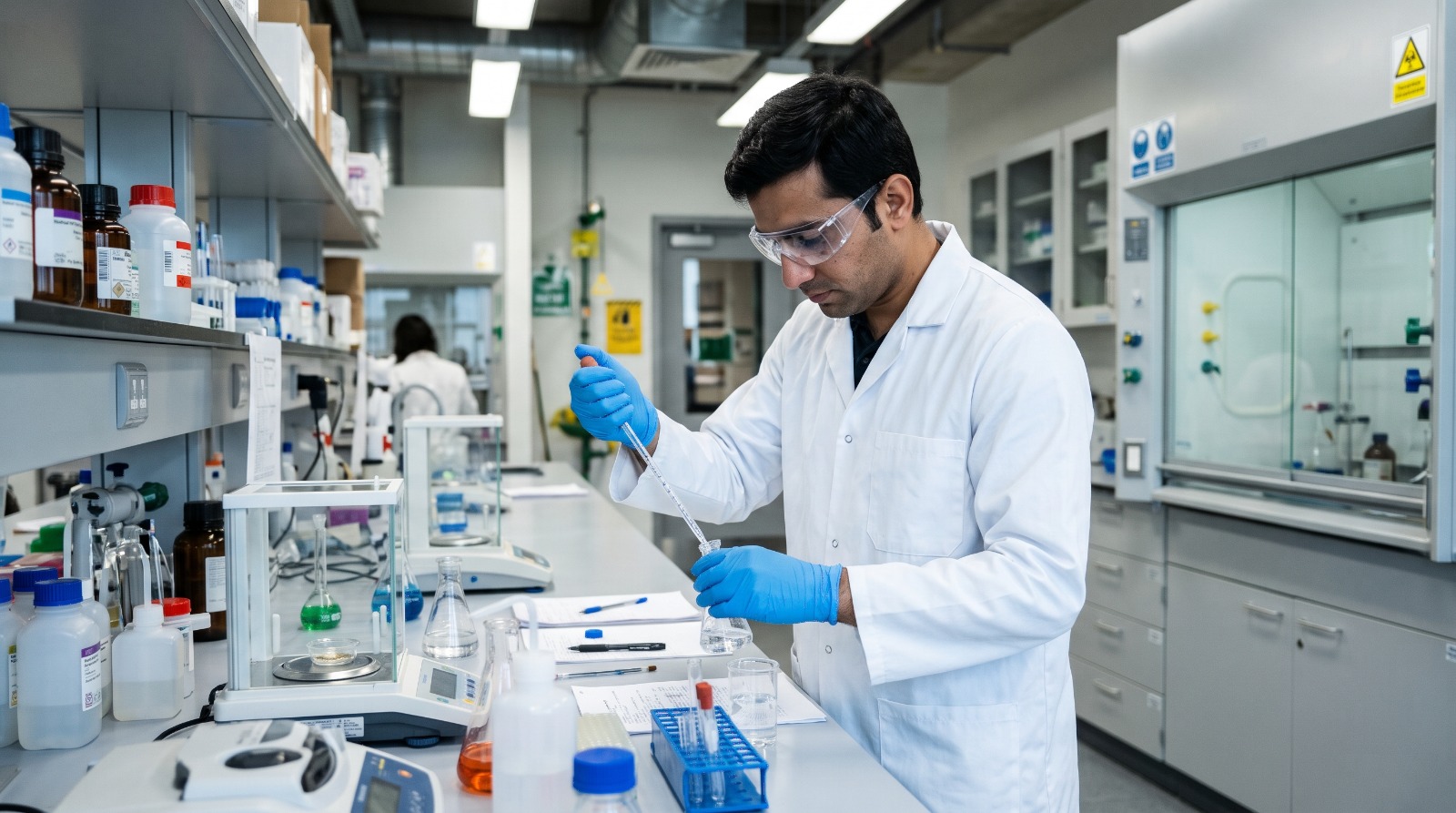
Chemical Laboratory Technician
A Chemical Laboratory Technician assists scientists, chemists, and laboratory professionals by preparing samples, operating laboratory equipment, conducting chemical tests, and recording results. They help ensure that chemicals, materials, and products meet required quality, safety, and testing standards.
- Prepare chemical solutions, reagents, and laboratory samples.
- Conduct routine chemical tests according to approved procedures.
- Operate laboratory instruments and testing equipment.
- Measure and record chemical properties and test results.
- Clean, calibrate, and maintain laboratory equipment.
- Follow laboratory safety rules and handle chemicals carefully.
- Label and store samples and chemical substances correctly.
- Maintain laboratory records and prepare test reports.
- Assist chemists with experiments and quality control procedures.
- Dispose of chemical waste according to safety and environmental requirements.
Chemical Principles
- Understand basic chemistry, including acids, bases, solutions, and chemical reactions.
- Know common laboratory chemicals and their properties.
- Understand concentration, measurement, and dilution procedures.
Laboratory Testing
- Understand sample preparation and testing methods.
- Know basic analytical techniques such as titration and pH testing.
- Understand laboratory documentation and result interpretation.
Safety and Quality Standards
- Understand chemical hazard labels and safety data sheets.
- Know proper chemical storage and waste disposal procedures.
- Understand quality control and laboratory safety practices.
Chemical Testing
- Prepare solutions and samples accurately.
- Conduct routine tests using standard procedures.
- Identify unusual results and report them to supervisors.
Equipment Handling
- Operate balances, pH meters, microscopes, and laboratory instruments.
- Clean and maintain laboratory equipment.
- Follow equipment calibration and maintenance procedures.
Documentation and Quality Control
- Record results accurately in laboratory logs.
- Prepare basic testing reports.
- Follow standard operating procedures and quality requirements.
Numerical Ability
- Calculate concentrations, dilutions, and measurements.
- Convert laboratory units accurately.
- Check calculations and test results.
Attention to Detail
- Measure small quantities precisely.
- Identify sample labeling errors and unusual results.
- Follow testing procedures consistently.
Practical and Analytical Ability
- Handle laboratory tools safely and carefully.
- Recognize possible causes of testing errors.
- Follow instructions and solve routine laboratory problems.
Chemical Laboratory Technicians are generally careful, methodical, responsible, and interested in scientific work. They do well at jobs that need:
- Accuracy: Produce reliable measurements and test results.
- Patience: Complete tests and procedures carefully.
- Responsibility: Follow chemical safety requirements.
- Curiosity: Understand how materials and substances behave.
- Discipline: Follow laboratory procedures consistently.
- Teamwork: Cooperate with chemists and laboratory staff.
Laboratory Instruments
- Use analytical balances and pH meters.
- Operate spectrophotometers and other testing instruments where required.
- Use burettes, pipettes, and volumetric glassware.
Laboratory Information Systems
- Record test results in spreadsheets or laboratory software.
- Maintain digital sample records and testing reports.
- Use laboratory information management systems where available.
Safety and Quality Equipment
- Use fume hoods, safety cabinets, and protective equipment.
- Monitor laboratory conditions and equipment performance.
- Follow chemical storage and waste management procedures.
- Matric with science subjects may qualify for some assistant or trainee positions.
- Intermediate in Pre-Engineering or Pre-Medical is beneficial.
- A diploma or bachelor's degree in Chemistry, Chemical Technology, Applied Chemistry, or a related field may be required for technical roles.
- Knowledge of basic chemistry and laboratory procedures.
- Practical training in sample preparation and chemical testing.
- Understanding of chemical hazards and laboratory safety.
- Basic computer skills for data entry and reporting.
- Ability to follow written instructions and standard operating procedures.
- Internship or laboratory experience is beneficial.
Chemical Laboratory Technicians can find opportunities in manufacturing, pharmaceuticals, food processing, environmental testing, agriculture, education, and research laboratories. Demand depends on industrial activity, quality assurance requirements, and laboratory testing needs. With further education and experience, they may progress to Senior Laboratory Technician, Quality Control Technician, Laboratory Supervisor, or Chemical Analyst, depending on qualifications and employer requirements.
- Chemical manufacturing plants.
- Pharmaceutical and medicine manufacturing companies.
- Food and beverage testing laboratories.
- Cement, paint, fertilizer, and textile industries.
- Environmental testing laboratories.
- Water quality testing facilities.
- Oil and gas laboratories.
- Agricultural and soil testing laboratories.
- Universities, colleges, and research institutions.
- Government testing and standards laboratories.
- Matric with science subjects for some entry-level laboratory support roles.
- FSc Pre-Engineering or Pre-Medical.
- Diploma of Associate Engineering in Chemical Technology, where offered.
- BS Chemistry, Applied Chemistry, or a related discipline.
- Practical training in analytical chemistry and laboratory methods.
- Courses in quality control, laboratory safety, and chemical handling.
- Training in laboratory equipment and documentation.
- Additional specialization for pharmaceutical, environmental, or industrial testing roles.
- Government College of Technology and other TEVTA institutes: Explore chemical technology and relevant technical diplomas where offered.
- National Vocational and Technical Training Commission (NAVTTC): Check available laboratory and chemical technology training programs.
- University of the Punjab, Lahore: Chemistry and applied science programs.
- University of Karachi: Chemistry and related scientific programs.
- COMSATS University Islamabad: Chemistry and relevant science programs where offered.
- Quaid-i-Azam University, Islamabad: Chemistry and related scientific research programs.
- University of Peshawar: Chemistry and related science programs.
- National University of Sciences and Technology (NUST): Relevant chemical sciences and engineering programs where available.
- Public university bachelor's degree: PKR 60,000 to 300,000 per year.
- Private university bachelor's degree: PKR 150,000 to 700,000 per year.
- Chemical technology diploma: PKR 20,000 to 150,000 in total.
- Laboratory skills short course: PKR 5,000 to 30,000.
- Chemical safety training: PKR 5,000 to 20,000.
- Quality control training: PKR 10,000 to 40,000.
- Books, lab coats, safety glasses, and learning materials: PKR 10,000 to 30,000 per year.
- Eligible students may receive 25% to 100% financial assistance through university scholarships, HEC-supported schemes, provincial programs, or need-based aid.