
CAREERS ENCYCLOPEDIA

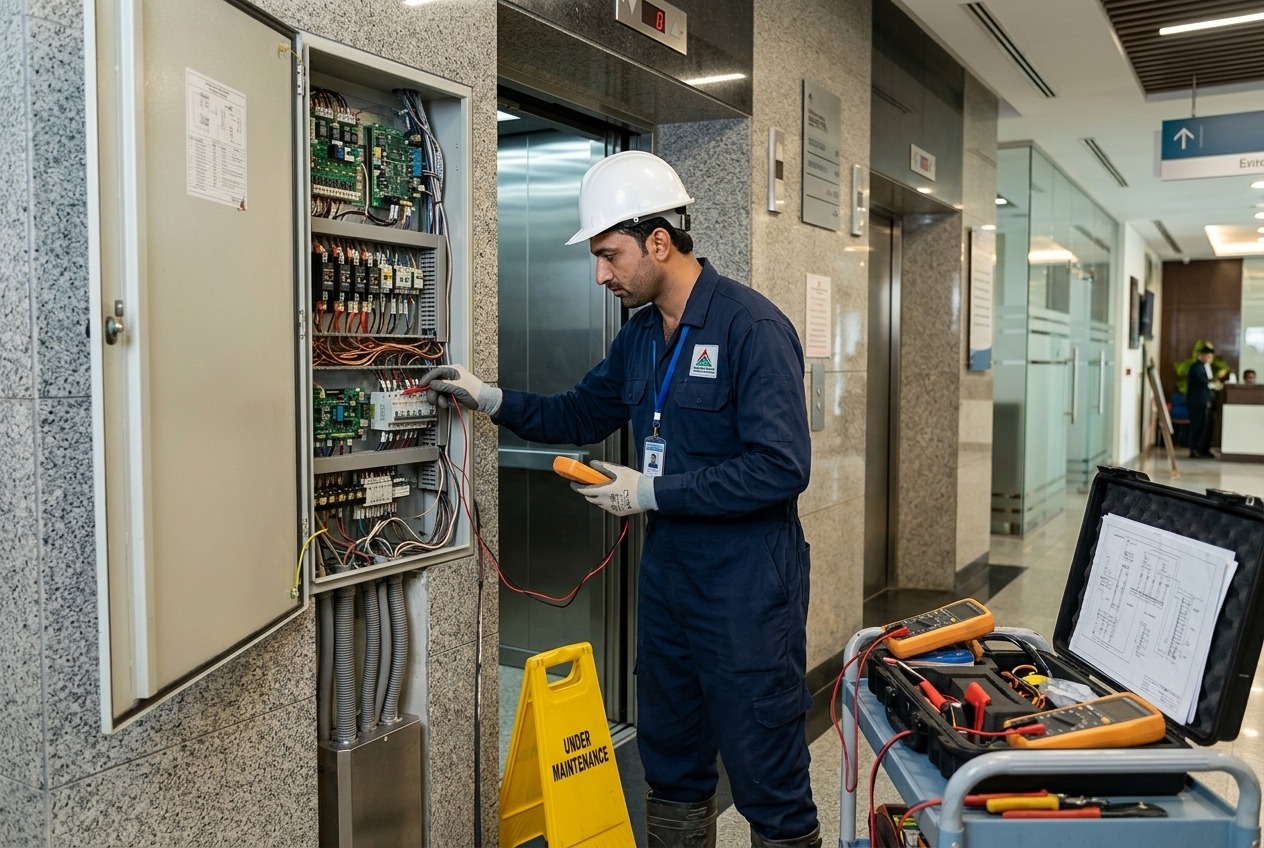
Elevator Technician
An Elevator Technician installs, inspects, maintains, and repairs elevators and lift systems in residential, commercial, and industrial buildings. They work with electrical circuits, mechanical components, control systems, and safety devices to ensure elevators operate safely and reliably.
- Install elevator components and control systems.
- Inspect motors, cables, brakes, and doors.
- Perform routine maintenance and safety checks.
- Diagnose electrical and mechanical faults.
- Repair or replace damaged elevator parts.
- Test elevator controls and emergency systems.
- Follow technical drawings and installation instructions.
- Respond to service calls and equipment breakdowns.
- Maintain service records and inspection reports.
- Follow workplace safety procedures during repairs.
Electrical Systems
- Understand electrical circuits and wiring.
- Know motors, switches, relays, and control panels.
- Understand electrical testing and safety procedures.
Mechanical Systems
- Understand gears, pulleys, cables, and braking systems.
- Know the basic operation of elevator doors and moving parts.
- Understand mechanical maintenance procedures.
Elevator Safety and Controls
- Understand elevator operating principles.
- Know emergency systems and safety devices.
- Understand maintenance instructions and technical standards.
Installation and Maintenance
- Install and adjust elevator components.
- Perform routine servicing and inspections.
- Replace worn or damaged parts.
Fault Diagnosis
- Identify electrical and mechanical problems.
- Use testing instruments to locate faults.
- Restore equipment operation according to procedures.
Technical Documentation
- Read electrical diagrams and technical drawings.
- Record maintenance activities and repairs.
- Follow manufacturer instructions and service manuals.
Mechanical Ability
- Understand how moving components work together.
- Handle tools and machine parts accurately.
- Identify unusual equipment behavior.
Problem-Solving Ability
- Investigate elevator faults.
- Determine suitable repair methods.
- Test equipment after maintenance.
Attention to Detail
- Check safety devices carefully.
- Follow maintenance procedures accurately.
- Recognize signs of wear and damage.
An Elevator Technician is careful, practical, responsible, patient, and comfortable working with technical equipment.
They do well at jobs that need:
Attention to Detail: Checks components and safety devices carefully.
Responsibility: Follows strict safety procedures.
Problem-Solving: Finds the causes of technical faults.
Patience: Performs maintenance tasks thoroughly.
Discipline: Follows technical instructions.
Teamwork: Coordinates with engineers and other technicians.
Electrical Testing Equipment
- Use multimeters and electrical testing instruments.
- Check wiring, circuits, and control panels.
- Test electrical components according to safety procedures.
Mechanical Tools
- Use spanners, screwdrivers, drills, and other repair tools.
- Work with lifting and alignment equipment where trained.
- Inspect cables, pulleys, and mechanical fittings.
Elevator Control Systems
- Work with elevator controllers and control panels.
- Use diagnostic tools to identify system faults.
- Review digital service manuals and maintenance records.
- DAE in Electrical, Electronics, Mechanical, or Mechatronics Technology is beneficial.
- Technical vocational training in elevator installation and maintenance.
- Knowledge of electrical and mechanical systems.
- Ability to read technical drawings and wiring diagrams.
- Practical skills in using testing instruments and hand tools.
- Understanding of workplace and electrical safety.
- Apprenticeship or supervised field experience is valuable.
- Additional manufacturer training may be required for specific elevator systems.
Elevator Technicians are needed for the installation and maintenance of lifts in apartments, offices, hospitals, shopping centers, hotels, and industrial buildings. Opportunities may grow with urban construction and the increasing use of elevators in multi-storey buildings. Experienced technicians may progress to senior technician, service supervisor, installation supervisor, or elevator maintenance manager.
- Elevator installation and maintenance companies.
- Commercial building management companies.
- Residential apartment projects.
- Hospitals and healthcare facilities.
- Shopping malls and hotels.
- Construction and engineering companies.
- Industrial facilities.
- Government building maintenance departments.
- Facilities management service providers.
- Independent elevator maintenance businesses.
- DAE in Electrical Technology.
- DAE in Electronics Technology.
- DAE in Mechanical Technology.
- DAE in Mechatronics Technology.
- Vocational courses in elevator installation and maintenance.
- Training in electrical safety and industrial maintenance.
- Manufacturer-specific elevator servicing courses.
- Apprenticeship with a qualified elevator service provider.
- Government College of Technology campuses offering electrical or mechanical diplomas.
- Technical Education and Vocational Training Authority (TEVTA), Punjab.
- Khyber Pakhtunkhwa Technical Education and Vocational Training Authority (KP-TEVTA).
- Sindh Technical Education and Vocational Training Authority (STEVTA).
- National Vocational and Technical Training Commission (NAVTTC) affiliated training providers.
- Government Polytechnic Institutes offering electrical, mechanical, or electronics technology.
- Authorized elevator companies offering technical training for their equipment.
- Public technical diploma: PKR 20,000 to 100,000 per year.
- Private technical diploma: PKR 50,000 to 200,000 per year.
- Short electrical or mechanical maintenance course: PKR 10,000 to 40,000.
- Elevator installation and maintenance training: PKR 20,000 to 80,000.
- Electrical safety training: PKR 5,000 to 25,000.
- Tools and protective equipment: PKR 10,000 to 35,000.
- Industrial maintenance training: PKR 10,000 to 50,000.
- Scholarships and financial assistance: Eligible learners may receive free or subsidized technical training through selected government vocational programs and institutional support.