
CAREERS ENCYCLOPEDIA

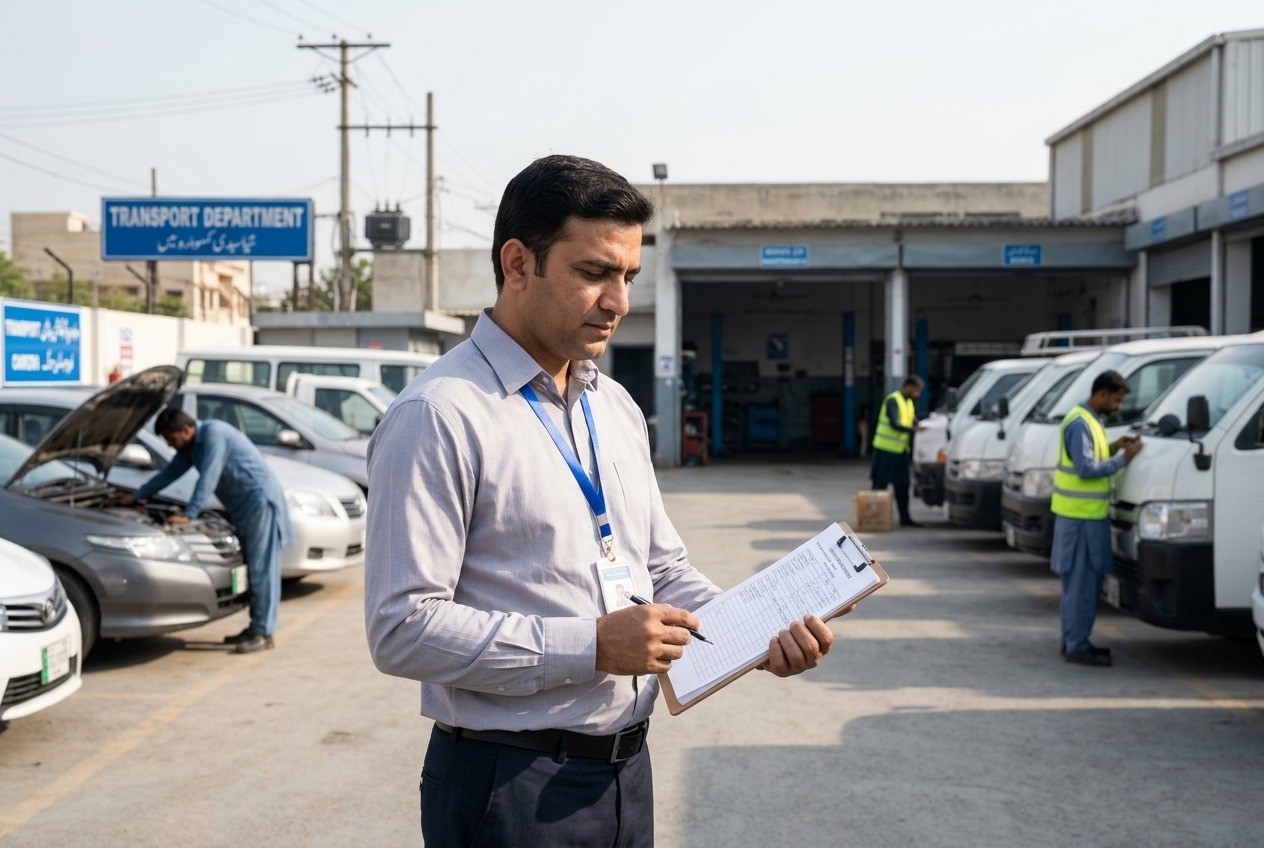
Superintendent Fleet
A Superintendent Fleet manages an organization's vehicles and transport operations. They supervise vehicle maintenance, driver assignments, fuel usage, transport schedules, and fleet records to ensure that vehicles remain safe, reliable, and cost-effective.
- Supervise daily fleet and transport operations.
- Maintain records of vehicles, drivers, fuel consumption, and mileage.
- Schedule regular vehicle inspections and maintenance.
- Monitor repair work and coordinate with workshops.
- Assign vehicles and drivers according to operational needs.
- Check vehicle documents, insurance, registration, and fitness certificates.
- Monitor fuel expenses and maintenance costs.
- Ensure drivers follow safety rules and transport policies.
- Prepare fleet performance and expense reports.
- Coordinate with management, suppliers, and transport staff.
Fleet Operations
- Understand vehicle allocation and transport scheduling.
- Know fleet utilization and operational procedures.
- Understand driver supervision and route planning.
Vehicle Maintenance
- Know basic vehicle systems and maintenance requirements.
- Understand inspection and repair schedules.
- Recognize common vehicle faults and maintenance needs.
Transport Regulations
- Understand vehicle registration and licensing requirements.
- Know road safety rules and transport policies.
- Understand insurance and vehicle documentation procedures.
Fleet Coordination
- Allocate vehicles according to operational requirements.
- Coordinate driver schedules and vehicle availability.
- Manage transport requests and daily assignments.
Recordkeeping and Reporting
- Maintain fuel, mileage, repair, and service records.
- Prepare fleet budgets and expense reports.
- Use spreadsheets to monitor fleet performance.
Supervision and Communication
- Guide drivers and transport staff.
- Coordinate with mechanics, suppliers, and management.
- Resolve scheduling and vehicle-related issues.
Organizational Ability
- Manage several vehicles and tasks simultaneously.
- Maintain accurate fleet records.
- Prioritize maintenance and transport requirements.
Problem-Solving Ability
- Identify vehicle and scheduling problems.
- Arrange timely repairs and alternative transport.
- Make practical decisions during operational delays.
Numerical Ability
- Calculate fuel consumption and operating costs.
- Compare maintenance expenses.
- Review mileage and fleet performance data.
Superintendents Fleet are generally organized, responsible, practical, and comfortable supervising people and equipment. They do well at jobs that need:
Leadership: Ability to supervise drivers and transport staff.
Responsibility: Commitment to vehicle safety and proper maintenance.
Attention to Detail: Careful checking of records and documents.
Decision-Making: Ability to manage unexpected transport issues.
Discipline: Consistent application of fleet policies.
Communication: Clear coordination with staff and management.
Fleet Management Systems
- Fleet tracking and vehicle management software.
- GPS tracking and route monitoring systems.
- Digital vehicle scheduling and allocation tools.
Recordkeeping Tools
- Microsoft Excel and Google Sheets.
- Digital fuel and maintenance records.
- Reporting and document management applications.
Vehicle Monitoring Tools
- Vehicle diagnostic and inspection equipment.
- Fuel monitoring systems.
- Maintenance scheduling and service tracking tools.
- Intermediate education or a bachelor's degree, depending on the organization.
- A degree or diploma in logistics, transport management, business administration, or a related field may be preferred.
- Experience in fleet operations, transport supervision, or vehicle maintenance.
- Knowledge of vehicle documents and maintenance procedures.
- Good computer skills, particularly in spreadsheets and recordkeeping.
- Ability to supervise drivers and transport personnel.
- Strong planning, communication, and problem-solving skills.
- A valid driving licence may be preferred or required for some positions.
- Government positions may require specific qualifications, experience, and recruitment procedures.
Superintendents Fleet can work in government departments, transport companies, logistics businesses, manufacturing organizations, and large institutions. Opportunities depend on fleet size, organizational requirements, and experience. With further experience, they may progress to Fleet Manager, Transport Manager, Logistics Manager, or Operations Manager.
- Government transport departments.
- Public-sector organizations and municipal services.
- Logistics and supply chain companies.
- Public transport and passenger transport operators.
- Construction and engineering companies.
- Manufacturing and distribution businesses.
- Hospitals and large educational institutions.
- Oil, gas, and energy companies.
- Courier and delivery services.
- Corporate organizations with large vehicle fleets.
- Intermediate in any relevant study group for suitable entry-level roles.
- Bachelor's degree in Business Administration or Management.
- Bachelor's degree in Supply Chain Management or Logistics.
- Diploma in Transport Management or Fleet Operations.
- Technical training in automobile technology or vehicle maintenance.
- Short courses in fleet management, occupational safety, and transport regulations.
- Training in Excel, GPS tracking, and fleet management software.
- National University of Sciences and Technology (NUST), Islamabad, for relevant engineering and management programs.
- COMSATS University Islamabad, for relevant business and management programs.
- University of the Punjab, Lahore, for relevant business programs.
- Virtual University of Pakistan, for relevant business and management studies.
- Government College University Lahore, for relevant management programs.
- Government College of Technology institutes, for automobile and mechanical technology programs.
- National Vocational and Technical Training Commission (NAVTTC), for relevant technical and vocational training.
- Provincial Technical Education and Vocational Training Authorities (TEVTAs), for available automobile and transport-related courses.
- Public university bachelor's degree: approximately PKR 60,000 to 300,000 per year.
- Private university bachelor's degree: approximately PKR 150,000 to 700,000 per year.
- Technical diploma or vocational training: approximately PKR 20,000 to 150,000 for the full course.
- Fleet management or logistics short course: approximately PKR 10,000 to 50,000.
- Automobile maintenance training: approximately PKR 15,000 to 80,000.
- Computer and Excel training: approximately PKR 5,000 to 25,000.
- Books, transport, and study materials: approximately PKR 10,000 to 30,000 per year.
- Eligible students may apply for HEC scholarships, university financial assistance, or relevant provincial education support.
- Technical and vocational training scholarships may be available through NAVTTC or provincial TEVTAs, subject to current schemes.