CAREERS ENCYCLOPEDIA

Educational Counselor
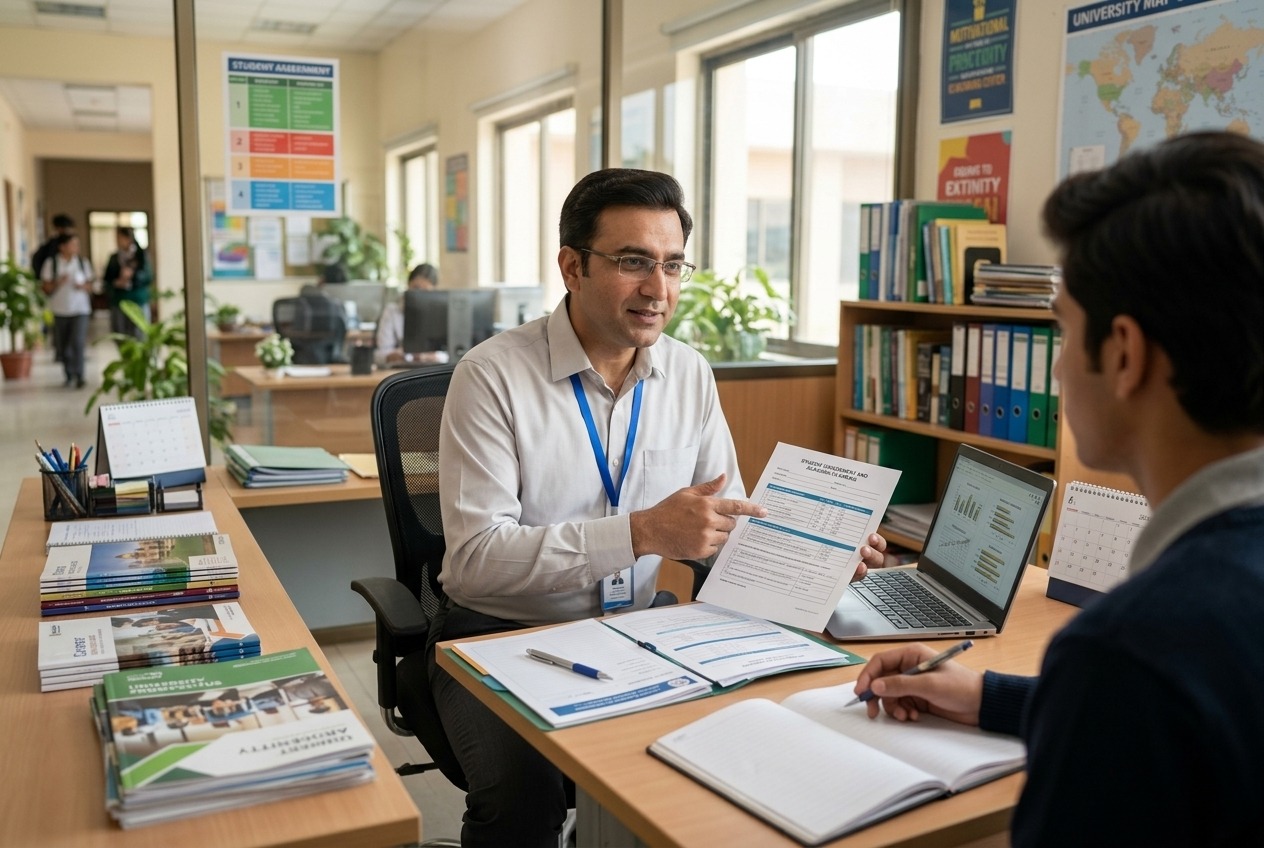
An Educational Counselor guides students in making informed decisions about their education, academic progress, subject selection, and future learning opportunities. This professional helps students identify their interests, strengths, and educational goals, provides information about academic programs, and supports them in overcoming learning-related challenges. In Pakistan, Educational Counselors may work in schools, colleges, universities, career guidance centers, and educational organizations.
- Guide students in selecting suitable subjects and academic programs.
- Discuss students' interests, strengths, abilities, and educational goals.
- Provide information about colleges, universities, and training programs.
- Help students understand admission criteria and application procedures.
- Guide students in finding scholarships and financial aid opportunities.
- Support students who face academic difficulties or uncertainty.
- Conduct individual and group counseling sessions.
- Maintain student records and counseling reports.
- Communicate with parents, teachers, and educational institutions.
- Refer students to specialized professionals when additional support is needed.
Educational Systems
- Understand school, college, university, and vocational education pathways.
- Know academic programs and subject selection requirements.
- Understand admission procedures and qualification levels.
Counseling Methods
- Understand student counseling principles and guidance techniques.
- Know how to conduct interviews and assess educational needs.
- Understand confidentiality and professional boundaries.
Academic and Career Planning
- Know how interests and abilities relate to educational choices.
- Understand scholarship opportunities and financial aid options.
- Stay informed about changing educational requirements and study pathways.
Student Counseling
- Listen carefully to students' concerns and goals.
- Help students compare educational options.
- Guide students toward realistic academic plans.
Communication
- Explain educational information in simple language.
- Communicate effectively with students, parents, and teachers.
- Conduct individual sessions and group guidance activities.
Research and Documentation
- Research admission requirements and scholarship opportunities.
- Maintain accurate student records.
- Prepare counseling plans and follow-up reports.
Interpersonal Ability
- Build trust with students and parents.
- Understand different educational needs and perspectives.
- Establish positive professional relationships.
Analytical Ability
- Review students' academic performance and goals.
- Identify challenges affecting educational progress.
- Compare study options according to student needs.
Problem-Solving Ability
- Help students address academic difficulties.
- Explore alternative education pathways.
- Develop practical plans for achieving educational goals.
Educational Counselors are generally supportive, patient, approachable, and organized. They do well at jobs that need:
Empathy: Understanding students' concerns and experiences.
Patience: Giving students time to explore their options.
Integrity: Maintaining confidentiality and providing honest guidance.
Communication: Explaining information clearly and respectfully.
Open-Mindedness: Respecting different interests, backgrounds, and goals.
Organization: Managing appointments, records, and follow-ups.
Counseling and Assessment Tools
- Digital counseling and student assessment platforms.
- Online interest and aptitude assessment tools.
- Video conferencing applications for online sessions.
Educational Research Tools
- University and college admission websites.
- Scholarship databases and education portals.
- Online academic and career information resources.
Documentation and Communication
- Microsoft Word and Excel.
- Google Docs, Sheets, and Forms.
- Email, presentation, and student record management tools.
- A bachelor's degree in Education, Psychology, Counseling, or a related field.
- A master's degree in Educational Psychology, Guidance and Counseling, or a related area may be preferred for specialized positions.
- Knowledge of educational pathways and admission requirements.
- Good listening, communication, and interpersonal skills.
- Understanding of student development and counseling principles.
- Ability to research academic programs and scholarships.
- Basic computer skills and accurate recordkeeping.
- Practical experience through internships or student support work is beneficial.
- Relevant professional training may be required by some schools or institutions.
Educational Counselors can work in schools, colleges, universities, educational consultancies, and career guidance organizations. Demand is influenced by student enrollment, institutional counseling services, and the growing need for informed academic planning. With experience and further qualifications, they may progress to Senior Educational Counselor, Student Affairs Officer, Counseling Coordinator, or Director of Student Services.
- Public and private schools.
- Colleges and higher secondary institutions.
- Universities and student affairs departments.
- Educational and career counseling centers.
- Study abroad and admission consultancy firms.
- Vocational and technical training institutes.
- Online educational counseling services.
- Non-governmental organizations working in education.
- Scholarship and student support programs.
- Career guidance organizations such as Pathfinder.
- BS Education.
- BS Psychology.
- BS Applied Psychology.
- BS or master's degree in Educational Psychology.
- Master's degree in Guidance and Counseling or Educational Counseling.
- Diploma or certificate courses in counseling skills.
- Training in student assessment, academic planning, and educational guidance.
- Workshops on scholarship research, admissions, and student development.
- Allama Iqbal Open University, Islamabad, for relevant education programs.
- National University of Modern Languages (NUML), Islamabad, for relevant education and psychology programs.
- Quaid-i-Azam University, Islamabad, for relevant psychology programs.
- University of the Punjab, Lahore, for relevant education and psychology programs.
- International Islamic University Islamabad, for relevant education programs.
- COMSATS University Islamabad, for relevant psychology-related programs where available.
- University of Peshawar, Peshawar, for relevant education and psychology programs.
- Virtual University of Pakistan, for relevant programs where offered.
- Public university bachelor's degree: approximately PKR 60,000 to 300,000 per year.
- Private university bachelor's degree: approximately PKR 150,000 to 700,000 per year.
- Master's degree: approximately PKR 100,000 to 500,000 for the full program, depending on the institution.
- Counseling skills short courses: approximately PKR 5,000 to 30,000.
- Student assessment and guidance training: approximately PKR 10,000 to 40,000.
- Educational planning and digital skills courses: approximately PKR 5,000 to 25,000.
- Books, internet, and study materials: approximately PKR 10,000 to 30,000 per year.
- Eligible students may apply for HEC scholarships, university merit scholarships, need-based financial assistance, or provincial scholarship programs.
- Some institutions provide financial aid or fee concessions to eligible students.