
CAREERS ENCYCLOPEDIA

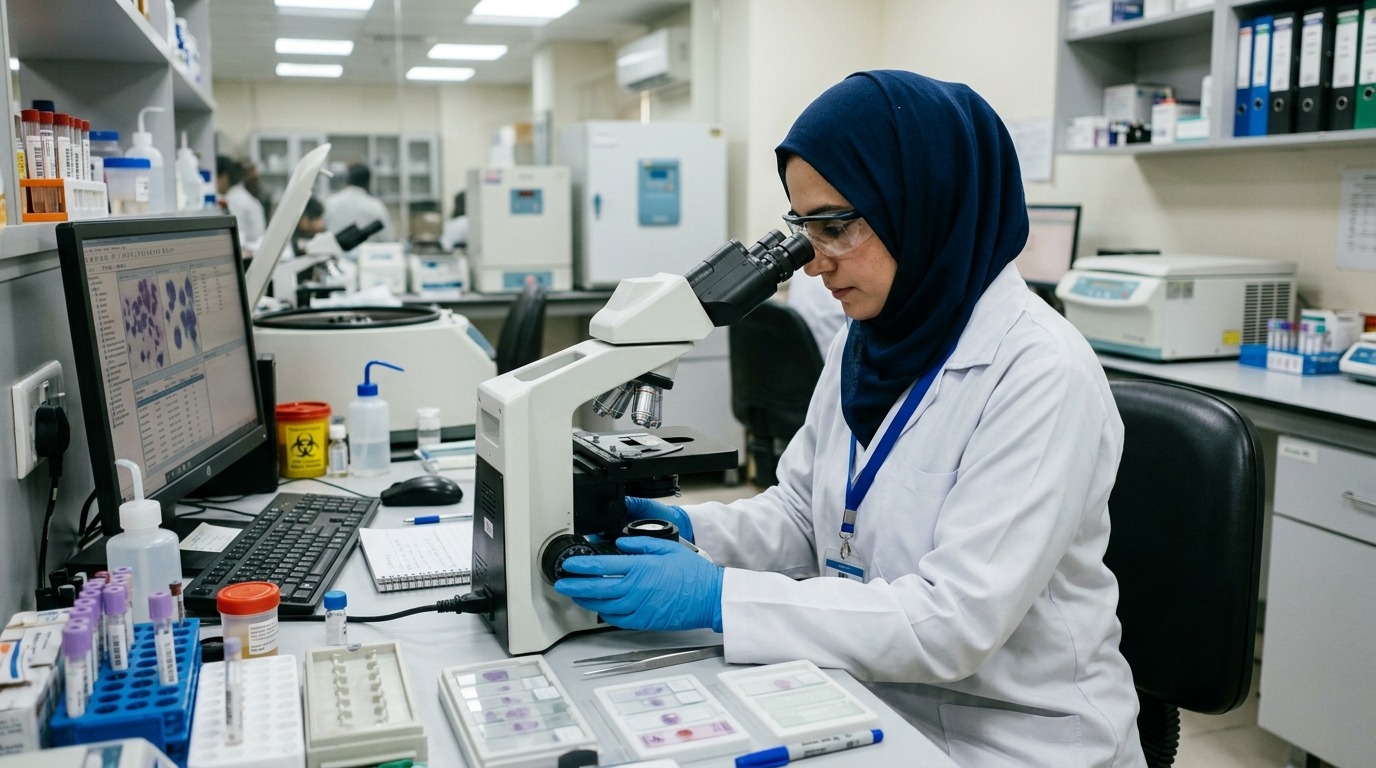
Cytotechnologist
A Cytotechnologist is a laboratory professional who examines cells under a microscope to identify abnormal, cancerous, or infectious changes. They prepare and analyze cell samples and support pathologists in diagnosing diseases.
- Prepare cell samples for laboratory examination
- Examine cells under microscopes
- Identify abnormal or unusual cell changes
- Screen samples for possible cancerous conditions
- Perform cytology laboratory procedures
- Record and document laboratory findings
- Maintain laboratory equipment and work areas
- Follow laboratory safety and quality standards
- Work with pathologists and other healthcare professionals
Cell Biology
- Cell structure and function
- Normal and abnormal cell characteristics
- Cellular changes linked to disease
Cytology and Pathology
- Cytology procedures
- Disease-related cellular changes
- Basic pathology concepts
Laboratory Safety
- Sample handling procedures
- Infection control
- Laboratory safety standards
Microscopic Examination
- Examine prepared cell samples
- Identify cellular abnormalities
- Distinguish normal and abnormal cells
Laboratory Techniques
- Prepare and process samples
- Apply staining procedures
- Handle laboratory specimens safely
Documentation and Reporting
- Record laboratory observations
- Maintain accurate sample records
- Communicate findings to pathologists
Observation
- Notice small cellular differences
- Recognize abnormal patterns
- Maintain visual accuracy
Analytical Ability
- Interpret microscopic findings
- Compare cellular characteristics
- Support diagnostic decisions
Technical Ability
- Operate laboratory equipment
- Follow precise procedures
- Maintain quality standards
People interested in this work like activities that include laboratory science, microscopy, biology, and medical investigation.
They do well at jobs that need:
- Careful
- Detail-oriented
- Analytical
- Patient
- Scientific
- Responsible
Microscopy Equipment
- Light microscopes
- Digital microscopy systems
- Slide examination equipment
Laboratory Equipment
- Centrifuges
- Sample preparation equipment
- Staining equipment
Digital Laboratory Systems
- Laboratory information systems
- Digital image analysis tools
- Electronic reporting systems
- Intermediate education with Pre-Medical subjects is useful
- Bachelor's degree in Medical Laboratory Technology, Biomedical Sciences, or a related field
- Specialized cytology training is beneficial
- Practical laboratory experience
- Professional registration or institutional requirements may apply
Cytotechnologists can work in pathology laboratories, hospitals, diagnostic centers, research institutions, and medical laboratories. Demand is supported by the need for cancer screening, disease diagnosis, and laboratory-based healthcare services.
- Hospital pathology laboratories
- Diagnostic laboratories
- Cancer screening centers
- Medical colleges and teaching hospitals
- Research laboratories
- Private healthcare laboratories
- Public health laboratories
- Biotechnology and medical research organizations
- Medical Laboratory Technology
- Biomedical Sciences
- Medical Laboratory Sciences
- Biology or related life sciences
- Specialized cytology training
- Laboratory quality and diagnostic training
- National University of Medical Sciences
- University of Health Sciences Lahore
- Dow University of Health Sciences
- Khyber Medical University
- University of the Punjab
- Recognized medical laboratory training institutes
- Laboratory technician course: PKR 20,000 to 100,000
- Specialized cytology training: PKR 30,000 to 150,000
- Bachelor's degree: PKR 60,000 to 400,000 per year
- Private university programs: PKR 150,000 to 500,000 per year
- Laboratory training and materials: PKR 10,000 to 50,000
- Professional workshops: PKR 5,000 to 30,000
- Merit scholarships may provide 25 percent to 100 percent fee support
- Need-based financial aid may also be available