CAREERS ENCYCLOPEDIA

Dietitian
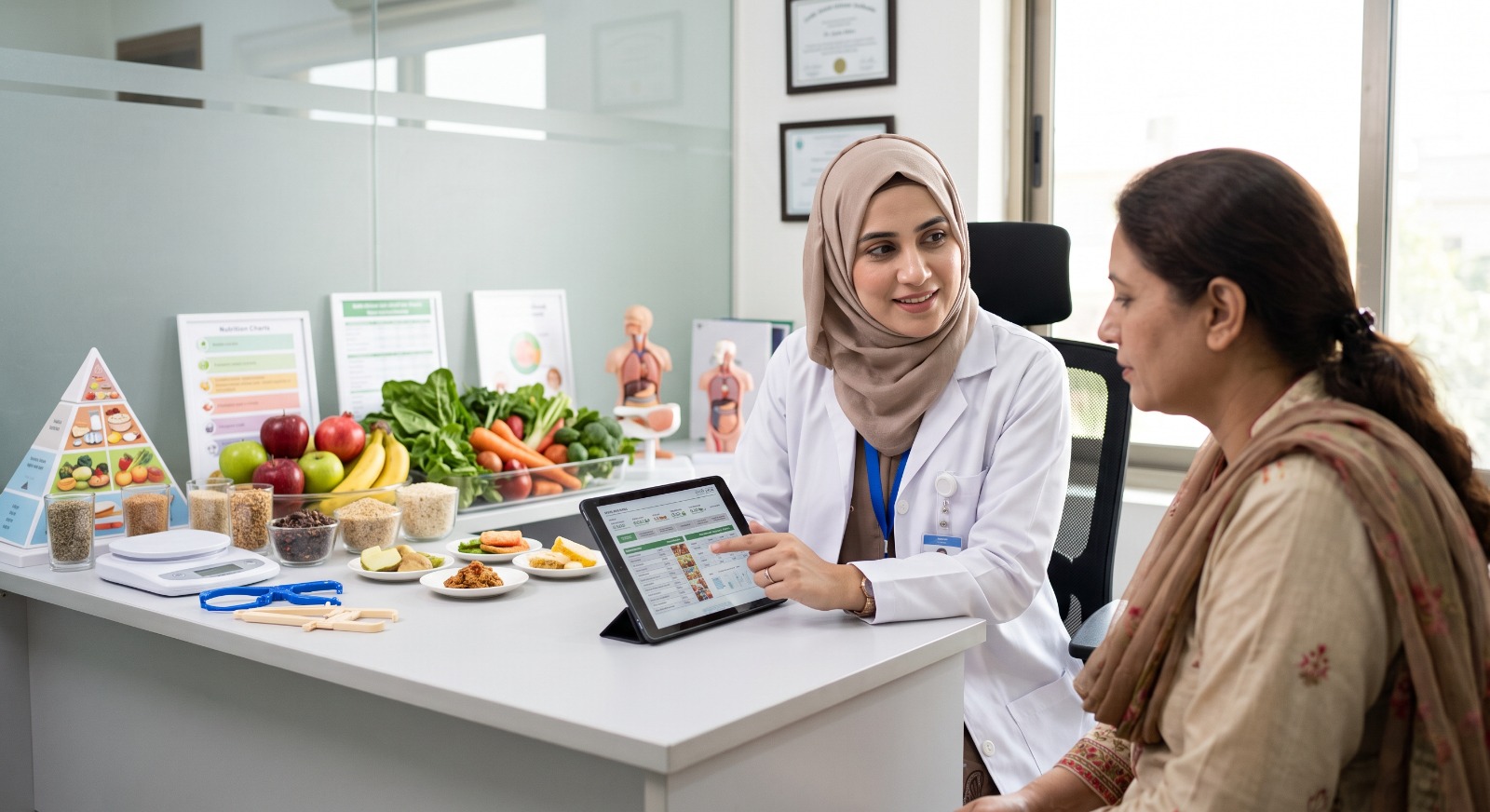
A Dietitian provides nutrition advice and develops suitable meal plans to support health and manage nutrition related conditions. They assess dietary needs, educate patients about healthy eating, and work with healthcare teams when required.
- Assess patients' nutritional needs
- Prepare individual meal plans
- Provide nutrition counseling
- Monitor dietary progress
- Recommend suitable foods and meal patterns
- Support patients with nutrition related conditions
- Educate patients about healthy eating
- Maintain patient nutrition records
- Work with doctors and healthcare teams
- Review and update nutrition plans
Nutrition
- Human nutrition
- Nutrients and their functions
- Healthy eating
- Meal planning
Health and Disease
- Nutrition related conditions
- Diabetes
- Obesity
- Heart health
Food Science
- Food composition
- Food safety
- Food preparation
Nutrition Assessment
- Assess dietary needs
- Review eating patterns
- Monitor nutritional progress
Meal Planning
- Prepare balanced meal plans
- Adjust diets according to individual needs
- Recommend suitable food choices
Communication
- Provide nutrition counseling
- Explain dietary information clearly
- Motivate clients to follow healthy habits
Analytical
- Analyze dietary information
- Identify nutritional problems
- Evaluate nutrition plans
Communication
- Listen to client concerns
- Explain nutrition information clearly
Attention
- Monitor changes in nutritional condition
- Maintain accurate patient records
People interested in this work like activities that include health, nutrition, people, and helping others improve their eating habits.
They do well at jobs that need:
- Compassion
- Patience
- Attention to Detail
- Responsibility
- Communication
Nutrition Software
- Nutrition analysis software
- Meal planning software
Health Record Systems
- Electronic health record systems
- Patient management software
Data Tools
- Microsoft Excel
- Statistical analysis software
- Intermediate education with science subjects
- Bachelor degree in Nutrition and Dietetics or a related field
- Clinical training is useful
- Registration may be required according to local professional requirements
- Good communication and nutrition counseling skills are important
Dietitians can work in hospitals, clinics, wellness centers, food organizations, schools, sports facilities, and private practice. Demand is linked to healthcare, preventive nutrition, and management of nutrition related conditions.
- Government hospitals
- Private hospitals
- Nutrition clinics
- Wellness centers
- Sports and fitness centers
- Schools and universities
- Food companies
- Public health organizations
- Non government organizations
- Private nutrition practices
- Intermediate with science subjects
- Bachelor degree in Nutrition and Dietetics
- Master degree in Nutrition or Dietetics
- Clinical nutrition training
- Continuing professional education
- University of Agriculture Faisalabad
- University of the Punjab
- Khyber Medical University
- University of Karachi
- Government and private universities offering Nutrition and Dietetics programs
- Bachelor degree: PKR 60,000 to 350,000 per year
- Private university: PKR 150,000 to 500,000 per year
- Books and study materials: PKR 10,000 to 30,000 per year
- Clinical training expenses: PKR 10,000 to 40,000
- Nutrition short courses: PKR 10,000 to 60,000
- Merit scholarships: 25 percent to 100 percent
- Need based financial aid: Partial or full fee support
- Government scholarships: Available through selected programs