
CAREERS ENCYCLOPEDIA

Chemical Engineer
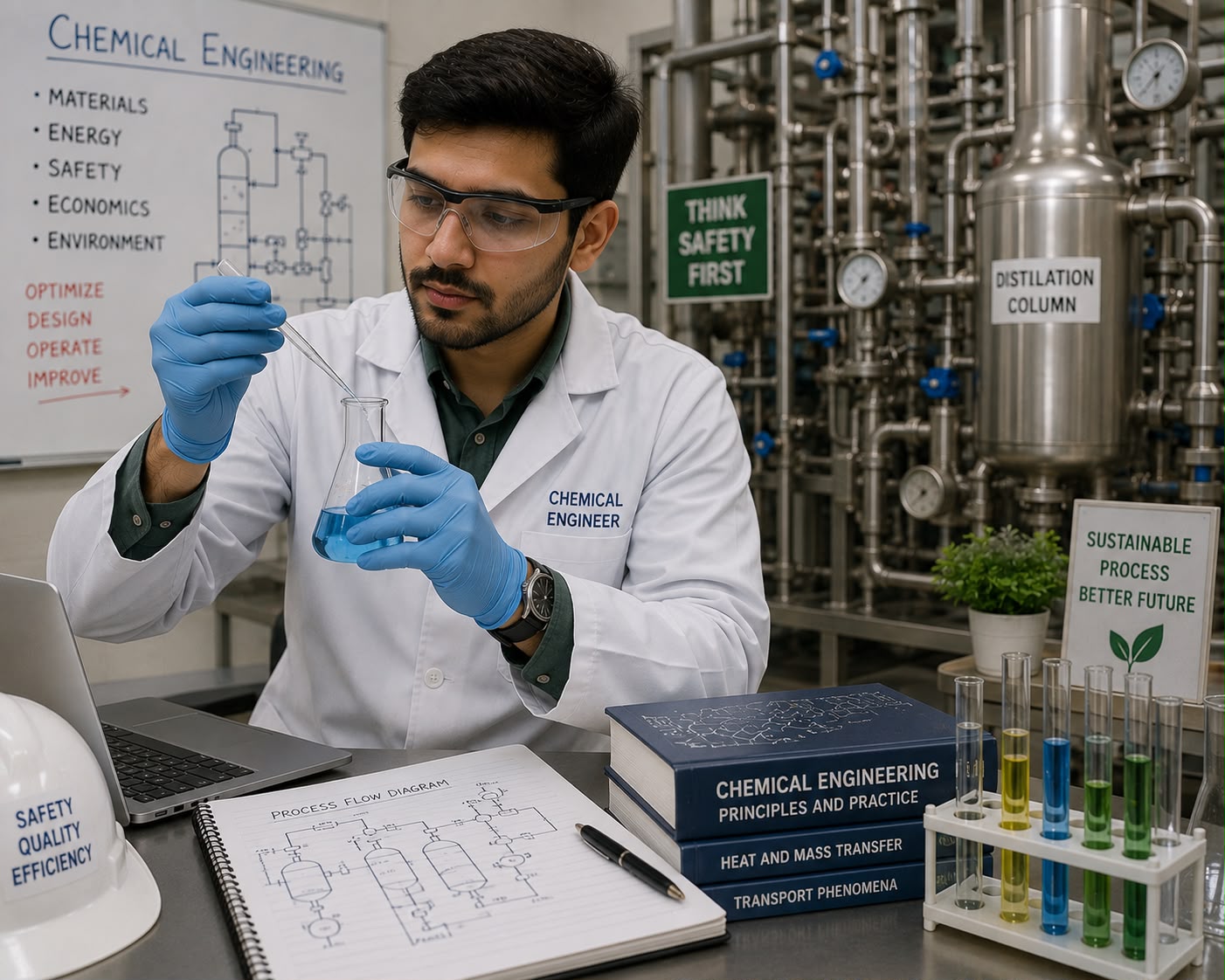
A Chemical Engineer designs, develops, and improves processes used to produce chemicals, fuels, medicines, food, materials, and other products. They work with chemical reactions, equipment, production systems, safety procedures, and quality control to make industrial processes efficient and safe.
Career Cluster Tag:
On The Job You Would:
- Design and improve chemical production processes
- Monitor industrial plants and production systems
- Test materials, chemicals, and finished products
- Develop safer and more efficient manufacturing methods
- Ensure production meets quality and safety standards
Knowledge
- Chemical engineering principles
- Chemistry and chemical reactions
- Process design and industrial operations
- Industrial safety and environmental regulations
Skills
- Process design and analysis
- Problem-solving and technical analysis
- Laboratory testing and experimentation
- Project management and technical documentation
Abilities
- Ability to analyze complex engineering problems
- Ability to work with mathematical and scientific data
- Ability to design efficient production processes
- Ability to identify and solve technical problems
Personality
- Analytical and practical
- Detail-oriented and responsible
- Creative and innovative
- Safety-conscious and disciplined
Technology
- Process simulation software
- Computer-aided design (CAD) tools
- Industrial control and monitoring systems
- Laboratory and chemical analysis equipment
Entry Requirements
- Bachelor’s degree in Chemical Engineering is generally required
- Strong background in mathematics, chemistry, and physics is important
- Industrial internships and practical training are beneficial
- Professional registration with the Pakistan Engineering Council is required for engineering practice
Job Outlook
Chemical Engineers have opportunities in manufacturing, petroleum, pharmaceuticals, food processing, fertilizers, polymers, energy, and environmental industries. Demand is supported by Pakistan’s industrial and chemical-processing sector
Where can you work?
- Chemical manufacturing plants
- Oil and gas and petroleum companies
- Pharmaceutical companies
- Fertilizer and food processing industries
- Research laboratories and environmental organizations
Education
- BE Chemical Engineering
- BS Chemical Engineering
- MS Chemical Engineering
- Specialized postgraduate programs in Process Engineering or related fields
Where can you study?
- University of Engineering and Technology (UET), Lahore
- University of the Punjab, Lahore
- NED University of Engineering and Technology, Karachi
- Mehran University of Engineering and Technology
- University of Karachi
- Ghulam Ishaq Khan Institute of Engineering Sciences and Technology (GIKI)
Expenses & Scholarships
Chemical Engineering degree programs generally cost between Rs. 60,000 and Rs. 700,000 per year, depending on the institution. Laboratory, equipment, and other university fees may add to the total cost. Scholarships are available through HEC, universities, provincial programs, and merit- or need-based financial assistance.
Similar Occupations: